
Harness engineering for AI products
Your AI feature is your harness.Most harnesses are accidental.
The harness is the layer between your LLM and your application: retrieval, prompt assembly, conversation memory, fallbacks, output validation. We diagnose where yours is leaking, rebuild what's broken, and leave you with one your team owns.
The dirty secret of LLM applications in 2026
The model isn't the problem.The layer around it is.
Six layers. All of them matter.
Take any production LLM application. Around the model sits the code that connects it to everything else. The retrieval layer. Prompt assembly. Conversation memory. The tool layer. Output validation. Retry and fallback logic. That whole apparatus is the harness, and it's the thing that, when done badly, makes your AI feature unreliable in ways the team usually can't trace.
Who we work with
Three audiences.Same harness work underneath.
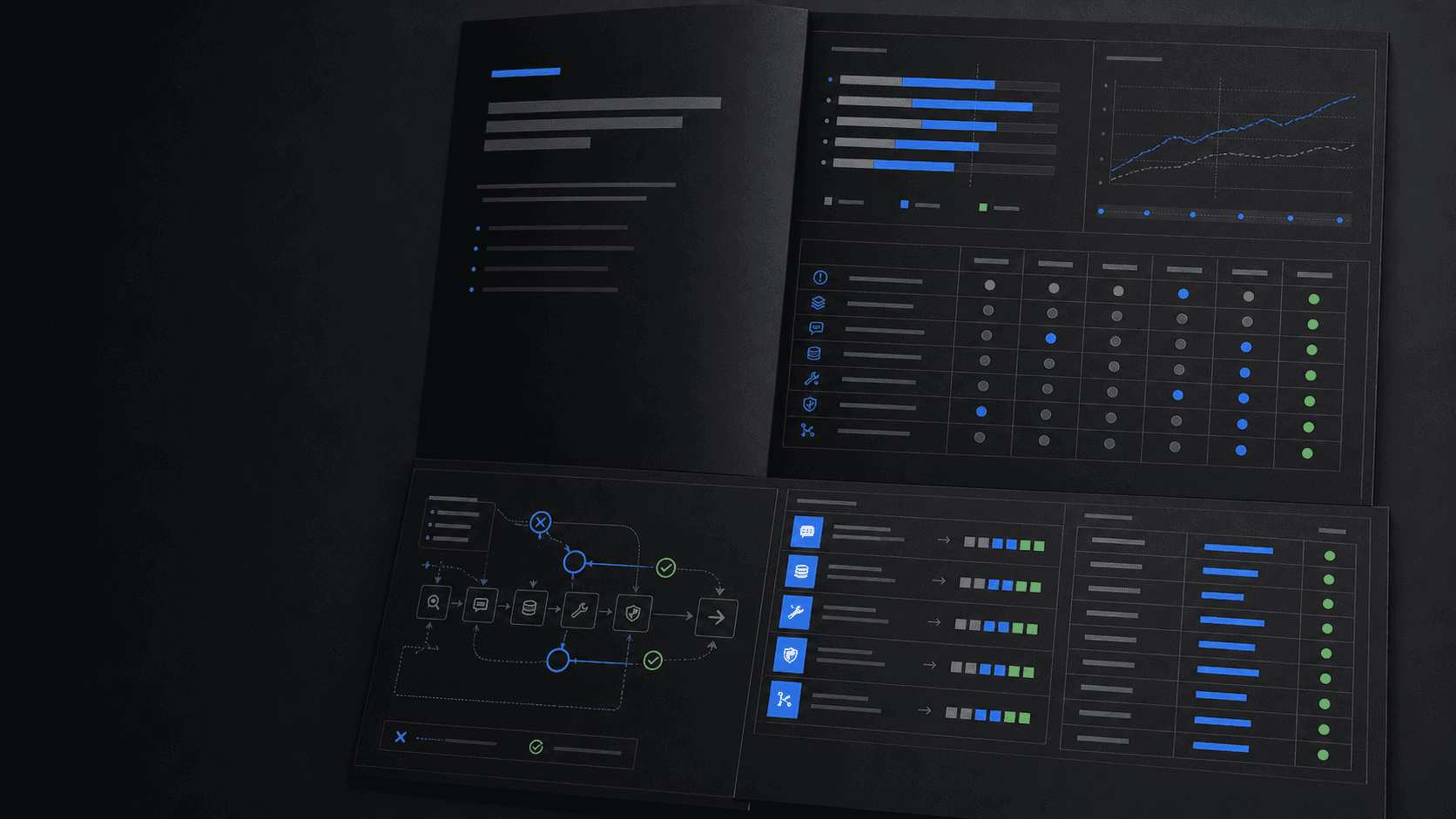
The highest-leverage fix is rarely the model. It is the harness layer that loses the signal before the model can use it.
A working outcome
We do not hand you a deck.We make the harness work.
The map is the operating plan, not the product. The product is a better harness: sharper retrieval, cleaner prompt assembly, memory that keeps raw detail, safer tool handling, stricter validation, and fallbacks that degrade gracefully. We rebuild those layers and run the eval set against the improved path.
Early result
The harness changed.The model didn't.
Retention improvement on a consumer mental health app after a Progressical harness rebuild. Same Claude model before and after. The delta came from fixing retrieval, tightening memory management, and adding structured output validation.
Sample. First three pilots in progress.
Before
12%
7-day retention
After
17%
7-day retention
Pricing
Pricing is straightforward.
Every engagement starts with an audit. You see what we found before committing to a rebuild. Early-stage teams: see Early Startups for starter pricing. Series B+ platform teams: see Platform Teams.
Most common
Rebuild
$35,000Four weeks
Audit plus rebuilt harness as a PR your team owns, evaluation set of 200–500 graded test cases, and an A/B test plan. Drop-in replacement for your current harness.
Money back if the rebuild doesn't beat your baseline on your metric.
Start here
Audit
$15,000— Two weeksDiagnostic report, prioritized fix list. We map every layer of your harness, identify where signal is being lost, and deliver a prioritized list of what to fix and why.
If we don't find three things to fix, you don't pay.
After audit or rebuild
Operations
$5,000/month— OngoingContinuous monitoring, regression alerts when models swap or traffic patterns shift, and quarterly tune-ups. Available after completing an Audit or Rebuild.
Coming next
The Platform: what comes after the Rebuild.
Services fix a point in time. The Platform is the continuous optimization layer — automated trace ingestion, harness diff analysis, eval-backed rollout gates, and regression monitoring. Built on the eval set your Rebuild leaves behind.
See the PlatformBusiness case
See the numbers before the audit.
Harness optimization works through two levers: token cost reduction (15–30% of LLM spend) and quality improvement (2–5pp retention). Estimate your numbers with the ROI calculator.
Open the calculatorQuestions teams ask before an audit
How every engagement starts
The audit is two weeksand fifteen thousand dollars.
If we don't find at least three things to fix in your harness, you don't pay. The audit is also how every Progressical engagement starts. Rebuild and operations follow from it.
Start with a diagnostic. Commit once you see the findings.
Two weeks, three findings minimum, or no charge. That's the audit. Rebuild and operations are available once you see what we found.